Family guides for connected homes
Real Risks. Practical Tips. Safer Families.
Plain-language guidance on apps, devices, games, scams, and AI, written for parents, grandparents, and caregivers.
✓ Written by a 25-year security professional ✓ Sourced from the FTC, FBI and NCMEC ✓ Free printable checklists
Start with three steps
Step 1
Learn the three warning signs
A rush, a secret, and an unusual way to pay show up in most scams, whether the message reaches you or your child.
Step 2
Complete the Family Safety Baseline
Ten settings and habits that reduce most everyday risk. Most take less than ten minutes.
Step 3
Talk about it tonight
A child who will come to you first is the strongest protection a family has. Start with one question at dinner.
Explore by topic
Privacy & Identity
What gets shared or collected?
Personal details, photos, location, child identity theft, credit freezes, and digital legacy planning.

Devices & Accounts
How do we set things up?
Phones, tablets, passwords, MFA, parental controls, home Wi-Fi, and smart devices.

Social Media & Gaming
Who can reach my child?
Social features, chat, friend requests, in-game spending, grooming, and sextortion.

Scams & Fraud
Is this message real?
Phishing texts, impersonation calls, gift-card demands, and scams aimed at older adults.

AI & Emerging Technology
What is changing?
Chatbots, deepfakes, cloned voices, and new tools families are starting to use.

Family Conversations
How do we build trust?
Family agreements, screen-time habits, and conversation starters by age.
Latest family guides
-

Holiday Console Safety Checklist: Nintendo, PlayStation and Xbox
A 15-minute checklist to set up parental controls on a new Nintendo Switch, PlayStation, or Xbox before it is unwrapped.
-
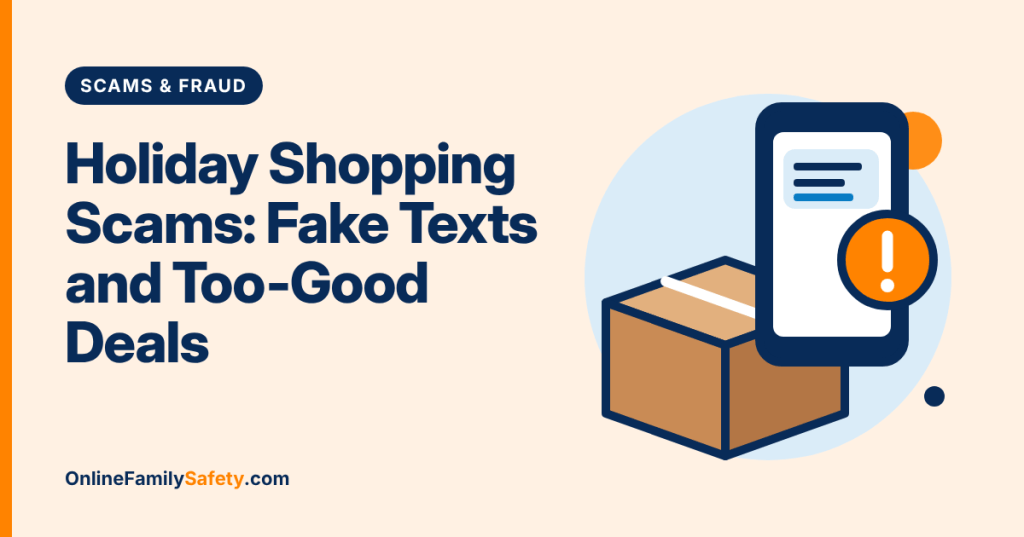
Holiday Shopping Scams: Fake Delivery Texts and Too-Good Deals
Fake delivery texts and too-good deals do most of the damage during holiday shopping. How to spot both, what to do instead, and what…
-
Smart Toys and Connected Gifts: A Parent’s Privacy Checklist
Smart toys and connected gifts can record, track, and share your child’s data. Six questions before you buy and a setup checklist before you…
Family Safety Check
If something has already happened
If a child is being threatened or pressured for images, or money has been sent to a scammer, take the first steps calmly: stop contact, keep the evidence, and report it. The Get Help page lists who to contact. In an emergency, call 911.
Free by email
Get all 13 printables in one download
Subscribe and we will email you the complete set right away, plus each new family safety guide when it goes up. No spam. Unsubscribe any time.
About OnlineFamilySafety.com

OnlineFamilySafety.com is written by David Pahlman, who has spent more than 25 years protecting people and information as a healthcare CIO, security auditor, and security leader. The site applies that experience to the questions families ask most, in calm and practical terms.

